
Topping DX1 II

€119.00*
In stock, delivery time: 1-3 days
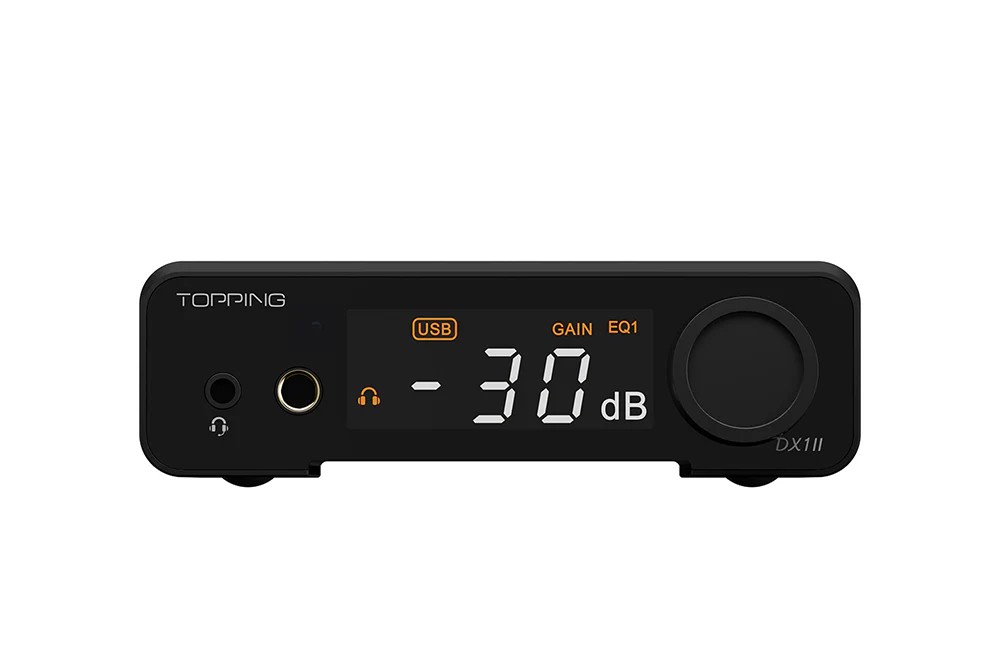
Gaming DAC and Headphone Amplifier
- Powerful, fully balanced headphone amplifier
- ES9039Q2M DAC for crystal-clear sound
- Gaming-optimized 10-band PEQ DSP
- Compatible with PS5 and Nintendo Switch
- DAC, DSP processor, and preamp all in one
- Support for crystal-clear voice chat
- Extremely low noise for sensitive IEMs
- Simple USB-C plug-and-play design
Simple USB-C plug-and-play design
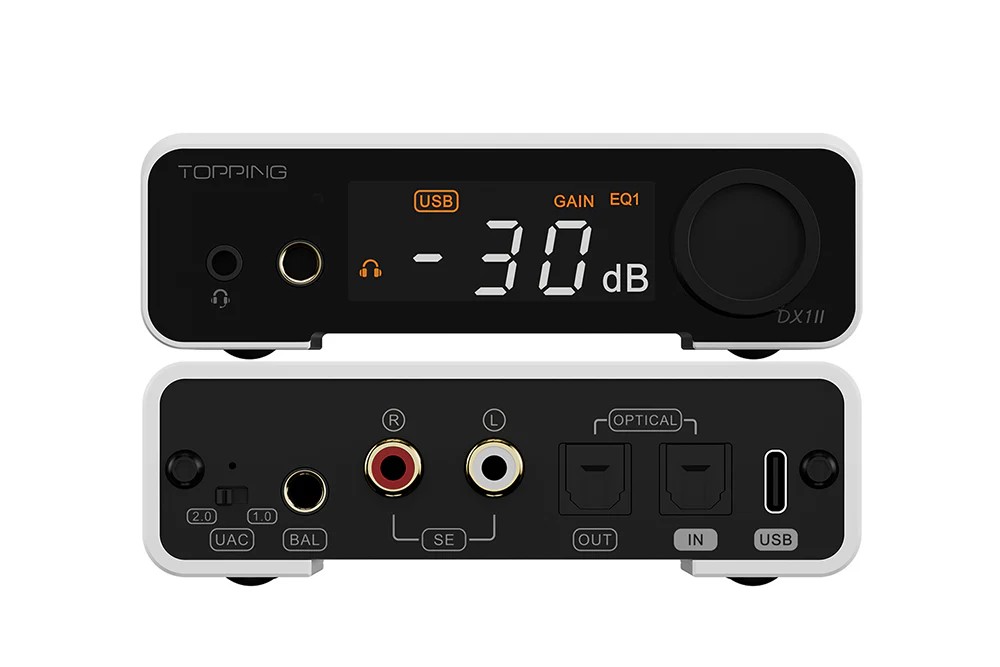
A single USB-C cable handles both audio transmission and power delivery, keeping your desk tidy. Included is an infrared remote control for convenient volume and playback control without pairing or connection lag.
DAC Upgrade: ES9039Q2M
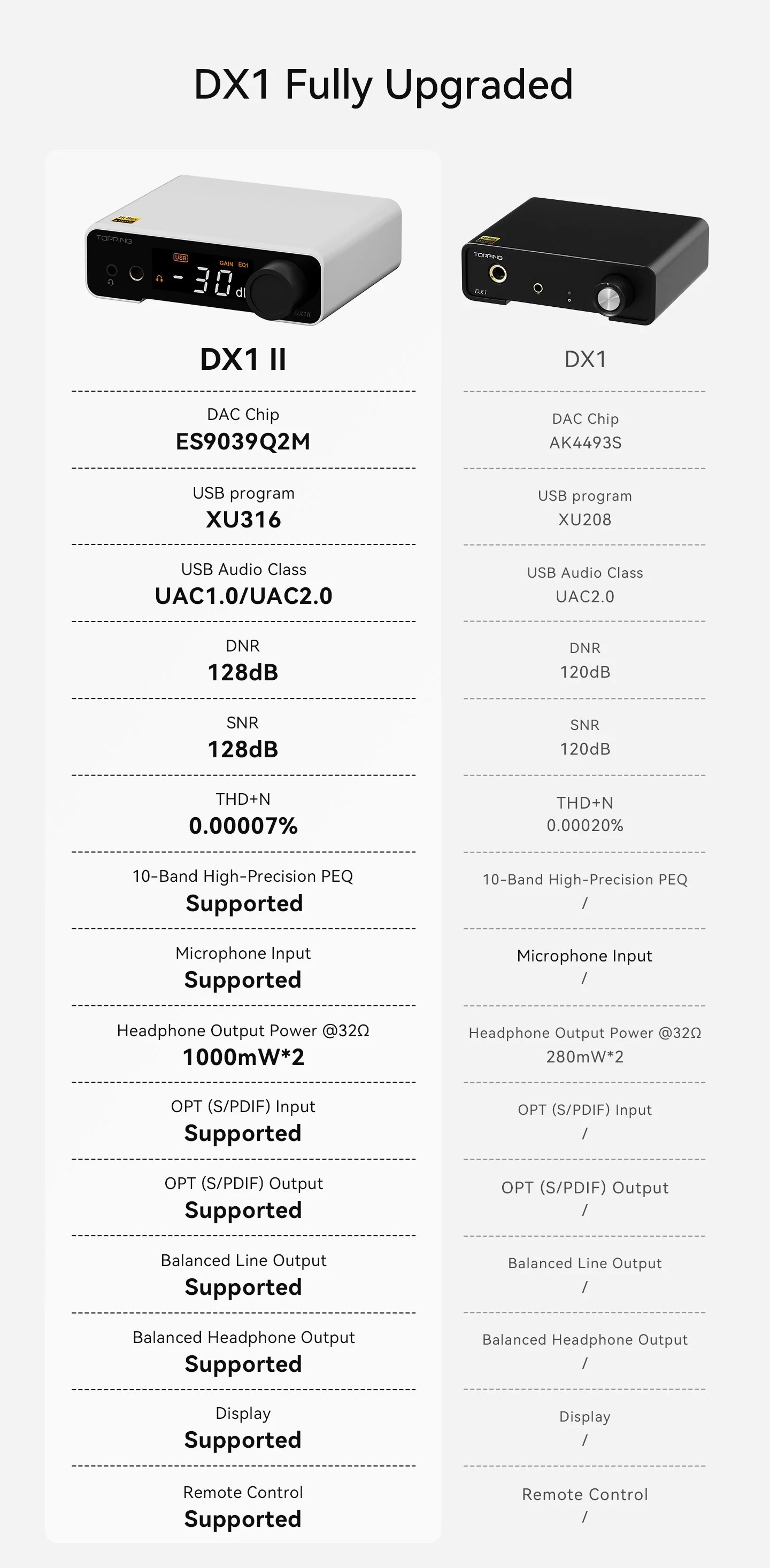
Equipped with ESS’s high-performance, next-generation ES9039Q2M DAC chip, the DX1 II builds upon the DX1 with further improvements, offering a wider dynamic range and lower distortion.
Powerful, Fully Balanced Headphone Amplifier
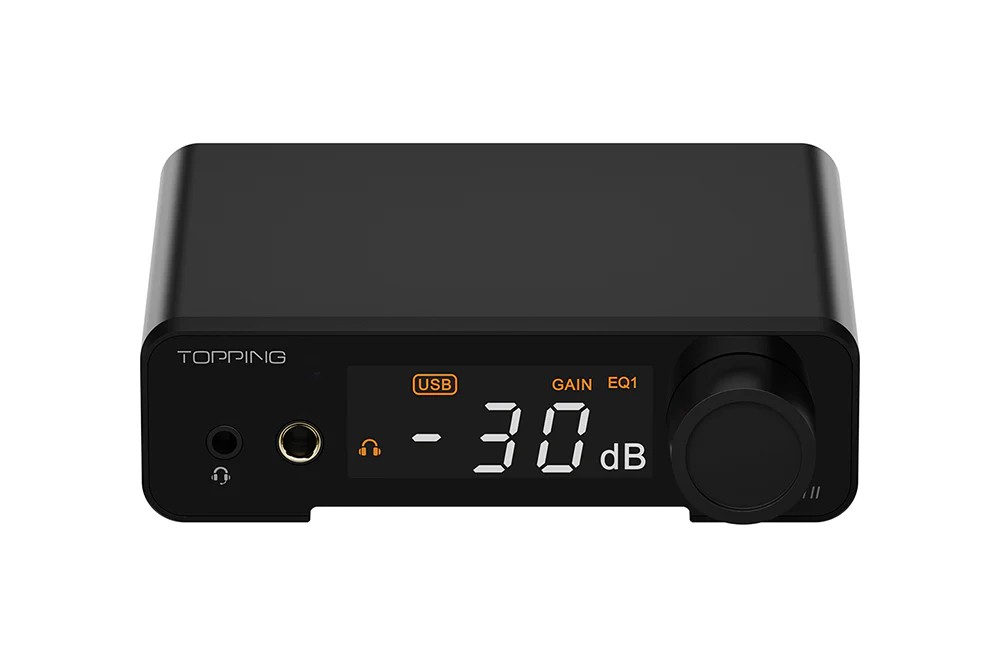
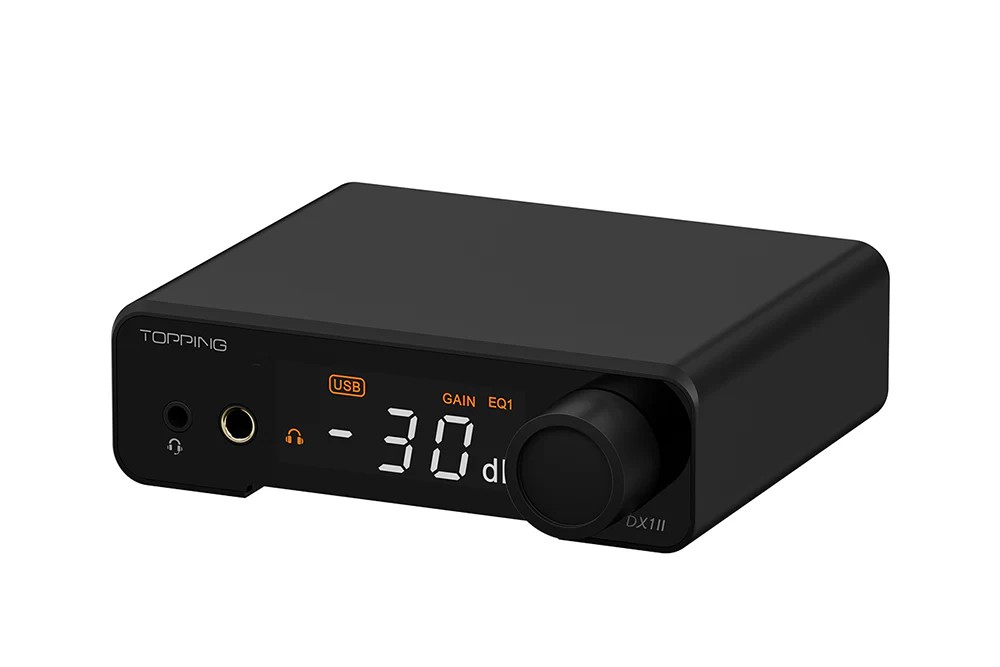
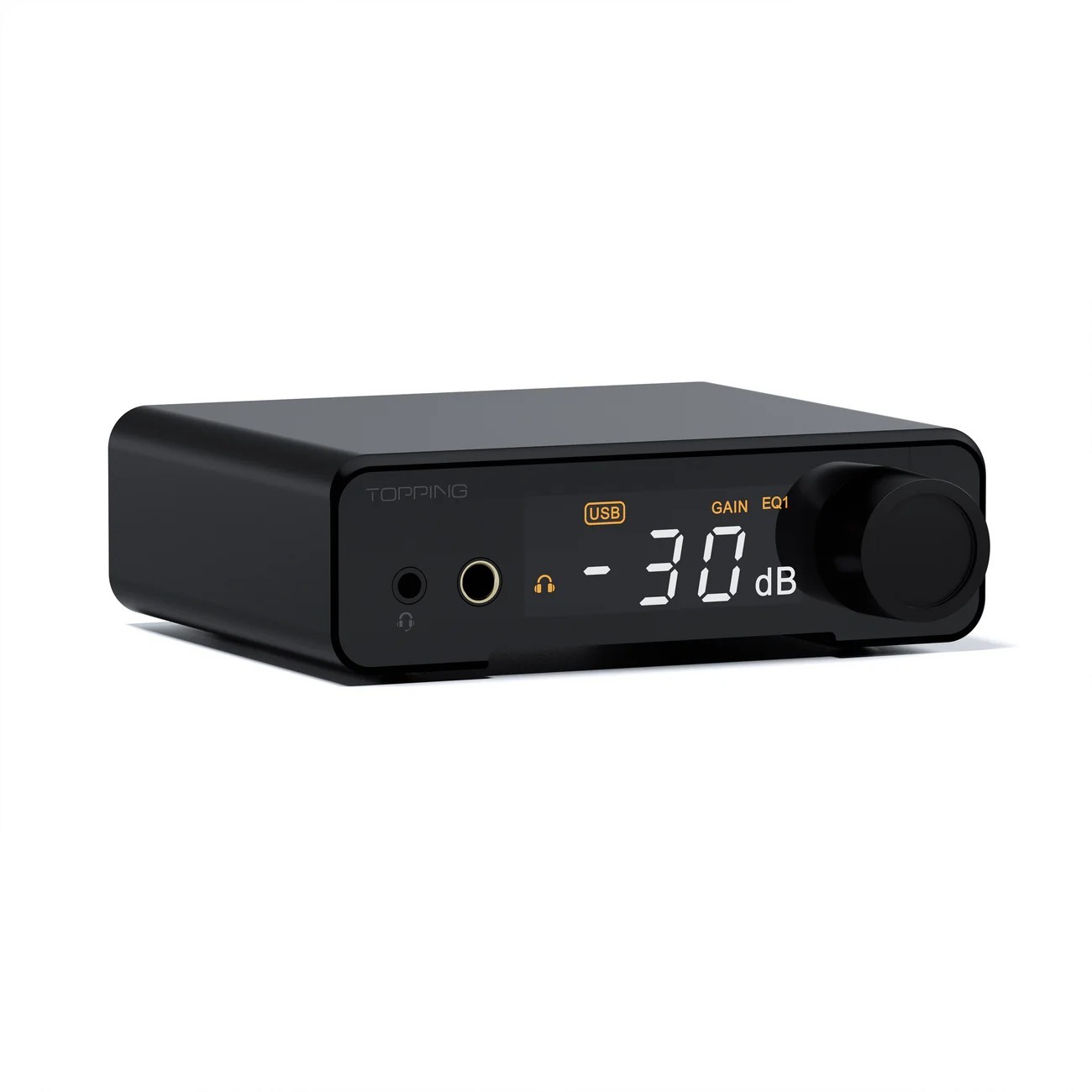
The headphone output is available via balanced 4.4-mm and unbalanced 3.5-mm connectors. The DX1 II is powered exclusively via the USB port and delivers up to 2 × 1000 mW at 32 Ω (THD+N < 1%). It also features two gain levels (High/Low). Thanks to its high output power and selectable gain, it can drive a wide range of headphones, from low-impedance IEMs to high-impedance headphones.
Extremely low noise level – even for sensitive IEMs
For an entry-level DAC/AMP combination, it is not difficult to deliver sufficient output power. What is truly challenging is achieving a truly quiet background. Topping has put considerable effort into optimizing the audio circuitry and has ultimately reduced the noise level to an impressive <0.9 µVrms. Even with highly sensitive IEMs, you can enjoy a clean, quiet, and pitch-black background for your music.
Four-channel, fully balanced architecture
The DX1 II features a fully balanced headphone amplifier architecture with four channels and an independent left/right channel design, delivering true balanced amplification from the DAC stage to the output stage. This not only ensures strong drive power and more stable control but also further improves resolution, dynamics, and imaging.
-When listening to music, fine details and layers of sound are reproduced with greater clarity, while the soundstage opens up more naturally.
-When gaming, footsteps, ambient sounds, and gunshots are reproduced more precisely, making positional awareness easier and more reliable.
3rd-generation XMOS XU-316
Powered by the high-end 16-core XU 316, the DX1 II supports PCM up to 384 kHz and DSD256 for lossless high-fidelity playback. It also features a custom-designed Thesycon USB driver for Windows while offering driver-free operation on macOS—ensuring stable and reliable performance.
DAC, DSP processor, and preamplifier in one
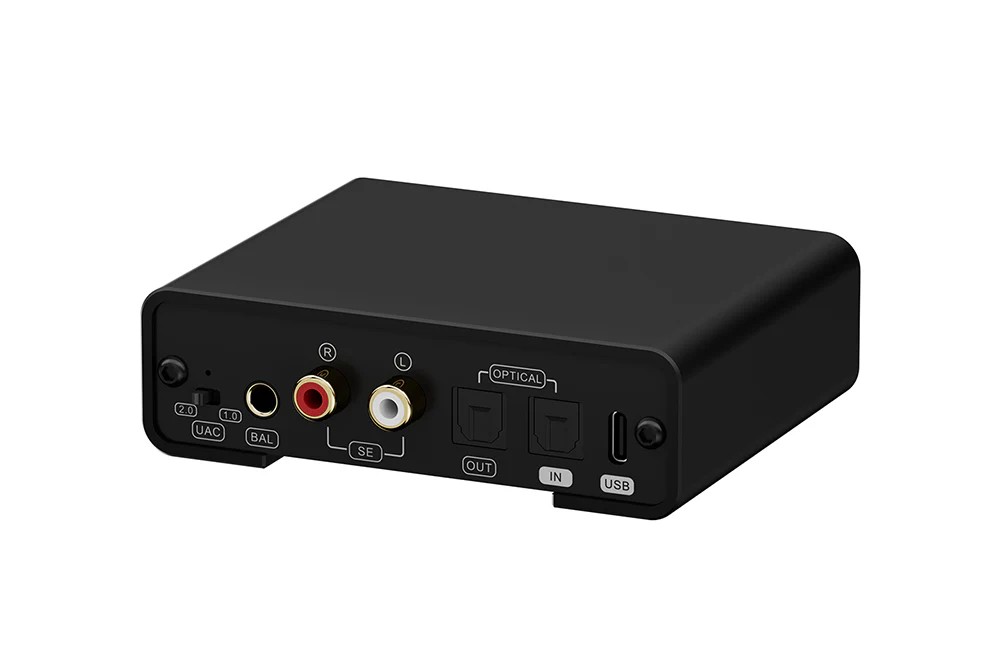
The DX1 II is more than just a DAC-amplifier combination—it also functions as a compact DSP processor and preamplifier. Building on its core functionality as a DAC and amplifier, the DX1 II is also equipped with independent optical inputs and outputs that support up to PCM 24-bit/192 kHz and DSD64 (DoP). This means the DX1 II is no longer limited to use with a computer but can also be integrated into your CD player, TV, or game console, enabling uniform PEQ processing before the signal is sent to downstream audio devices. The RCA and 3.5mm line outputs support active speakers and power amplifiers.
More configurations, more possibilities
Digital USB interface with PEQ Feed the DX1 II via USB from your computer, apply a 10-band PEQ, and then send the processed signal to a conventional DAC via the optical output. An easy way to add new flexibility and improved performance to your existing system.
-DSP processor Whether your source is a digital transport, a streamer, or a game console connected to a projector—as long as it has an optical output, you can connect it to the DX1 II and expand the system with high-precision 10-band PEQ DSP processing*
-DAC & Amp; Preamplifier In preamplifier mode, the DX1 II supports volume control on both its RCA single-ended line output and its 4.4mm balanced line output, allowing direct connection to a power amplifier or active speakers, regardless of whether a USB or optical input is used.
*This configuration applies to source devices equipped with an optical output.
Topping Home Web
The Topping Home Web platform* makes tuning the DX1 II clearer and more convenient. With the new drag-and-drop visual PEQ interface, you can easily create your ideal PEQ settings. After joining the community, you can also apply EQ files shared by other users with a single click, share your own EQ profiles, and communicate with other users.
*Note: Some features of this platform will be released gradually in future updates.
Ten-band high-precision PEQ
Tailor the sound to any configuration The DX1 II supports up to 10 bands with fully customizable PEQ settings.* With Topping’s proprietary tuning algorithm and the Topping Tune software, you can precisely adjust frequency, gain, and bandwidth, with independent settings available for the left and right channels. Topping Tune also supports the import of both target curves and raw curves, and then generates a compensation based on the target curve. Multiple profiles can be saved to switch between them quickly and conveniently. PEQ is available for all outputs—whether you’re connecting an older DAC, listening to music or games through headphones on your computer, or connecting speakers for playback: With the DX1 II, you can precisely tailor the sound to your ideal setup.
Gain an Edge in Gaming
Experienced gamers can use the high-precision 10-band PEQ to create and save multiple sound profiles, making footsteps more distinct and positional cues clearer. This helps you react faster and gain an advantage in competition. Customize your sound with the high-precision 10-band PEQ settings, including frequency, gain, bandwidth, and independent L/R channel tuning. Use the TOPPING Tune software to create profiles for footsteps, positional cues, music playback, speakers, or headphones.
Hear clearly, speak clearly
Equipped with a 3.5mm audio jack, the DX1 II supports both standard headphones and TRRS gaming headsets with a microphone input. The input supports up to 192 kHz/24-bit. Whether in intense gaming scenarios or voice recordings—a single headset can handle both high-fidelity audio playback and clear voice communication simultaneously, delivering a gaming experience that goes beyond typical onboard audio quality.
Compatible with Switch and PS5
To support a wider range of source devices, the USB input offers both UAC 1.0 and UAC 2.0 modes. When connecting to devices such as Nintendo Switch and PlayStation, simply switch to UAC 1.0 mode to ensure compatibility*, enabling a plug-and-play experience for both games and music.
*After switching modes, you must unplug and reconnect the USB cable for the change to take effect.
One USB-C Cable for Audio and Power
The USB-C port supports plug-and-play and combines data transfer and 5V power delivery in a single connector. Simply connect it to a computer, tablet, or other compatible device to enjoy integrated power delivery and high-quality audio playback.
Proprietary Discrete, Low-Noise Reference Power Supply (Patented)
Based on years of experience in circuit design, Topping has developed proprietary technology for discrete, low-noise reference power supplies. It provides independent, clean, and stable power to the DAC and analog amplifier stages.
Technical Specifications
DAC chip: ESS ES9039Q2M
USB processor: XMOS XU-316
USB audio mode: UAC 1.0/UAC 2.0
PCM support: Up to 384 kHz
DSD support: DSD256
Balanced output power: 1000 mW × 2 at 32 Ω
Balanced output power: 1000 mW × 2 at 64 Ω
Balanced output power: 230 mW × 2 at 300 Ω
THD+N: at least 0.000056% measured
SINAD: up to 125 dB
Signal-to-noise ratio: up to 128.8 dB
Dynamic range: Up to 128.8 dB
Balanced output level: 5.1 Vrms at 0 dBFS
Balanced headphone output level: 8.3 Vrms (measured)
Channel crosstalk: -140 dB at 1 kHz
Noise level: Less than 0.9 μVrms
Frequency response: 20 Hz–20 kHz (±0.1 dB), 20 Hz–40 kHz (±0.3 dB)
Dimensions: 10 x 10 x 3.2 cm
Package Contents
Topping DX1 II
Infrared remote control
USB-A to USB-C cable
USB-C to USB-C cable
Product information card
Gaming DAC and Headphone Amplifier
- Powerful, fully balanced headphone amplifier
- ES9039Q2M DAC for crystal-clear sound
- Gaming-optimized 10-band PEQ DSP
- Compatible with PS5 and Nintendo Switch
- DAC, DSP processor, and preamp all in one
- Support for crystal-clear voice chat
- Extremely low noise for sensitive IEMs
- Simple USB-C plug-and-play design
Simple USB-C plug-and-play design
A single USB-C cable handles both audio transmission and power delivery, keeping your desk tidy. Included is an infrared remote control for convenient volume and playback control without pairing or connection lag.
DAC Upgrade: ES9039Q2M
Equipped with ESS’s high-performance, next-generation ES9039Q2M DAC chip, the DX1 II builds upon the DX1 with further improvements, offering a wider dynamic range and lower distortion.
Powerful, Fully Balanced Headphone Amplifier
The headphone output is available via balanced 4.4-mm and unbalanced 3.5-mm connectors. The DX1 II is powered exclusively via the USB port and delivers up to 2 × 1000 mW at 32 Ω (THD+N < 1%). It also features two gain levels (High/Low). Thanks to its high output power and selectable gain, it can drive a wide range of headphones, from low-impedance IEMs to high-impedance headphones.
Extremely low noise level – even for sensitive IEMs
For an entry-level DAC/AMP combination, it is not difficult to deliver sufficient output power. What is truly challenging is achieving a truly quiet background. Topping has put considerable effort into optimizing the audio circuitry and has ultimately reduced the noise level to an impressive <0.9 µVrms. Even with highly sensitive IEMs, you can enjoy a clean, quiet, and pitch-black background for your music.
Four-channel, fully balanced architecture
The DX1 II features a fully balanced headphone amplifier architecture with four channels and an independent left/right channel design, delivering true balanced amplification from the DAC stage to the output stage. This not only ensures strong drive power and more stable control but also further improves resolution, dynamics, and imaging.
-When listening to music, fine details and layers of sound are reproduced with greater clarity, while the soundstage opens up more naturally.
-When gaming, footsteps, ambient sounds, and gunshots are reproduced more precisely, making positional awareness easier and more reliable.
3rd-generation XMOS XU-316
Powered by the high-end 16-core XU 316, the DX1 II supports PCM up to 384 kHz and DSD256 for lossless high-fidelity playback. It also features a custom-designed Thesycon USB driver for Windows while offering driver-free operation on macOS—ensuring stable and reliable performance.
DAC, DSP processor, and preamplifier in one
The DX1 II is more than just a DAC-amplifier combination—it also functions as a compact DSP processor and preamplifier. Building on its core functionality as a DAC and amplifier, the DX1 II is also equipped with independent optical inputs and outputs that support up to PCM 24-bit/192 kHz and DSD64 (DoP). This means the DX1 II is no longer limited to use with a computer but can also be integrated into your CD player, TV, or game console, enabling uniform PEQ processing before the signal is sent to downstream audio devices. The RCA and 3.5mm line outputs support active speakers and power amplifiers.
More configurations, more possibilities
Digital USB interface with PEQ Feed the DX1 II via USB from your computer, apply a 10-band PEQ, and then send the processed signal to a conventional DAC via the optical output. An easy way to add new flexibility and improved performance to your existing system.
-DSP processor Whether your source is a digital transport, a streamer, or a game console connected to a projector—as long as it has an optical output, you can connect it to the DX1 II and expand the system with high-precision 10-band PEQ DSP processing*
-DAC & Amp; Preamplifier In preamplifier mode, the DX1 II supports volume control on both its RCA single-ended line output and its 4.4mm balanced line output, allowing direct connection to a power amplifier or active speakers, regardless of whether a USB or optical input is used.
*This configuration applies to source devices equipped with an optical output.
Topping Home Web
The Topping Home Web platform* makes tuning the DX1 II clearer and more convenient. With the new drag-and-drop visual PEQ interface, you can easily create your ideal PEQ settings. After joining the community, you can also apply EQ files shared by other users with a single click, share your own EQ profiles, and communicate with other users.
*Note: Some features of this platform will be released gradually in future updates.
Ten-band high-precision PEQ
Tailor the sound to any configuration The DX1 II supports up to 10 bands with fully customizable PEQ settings.* With Topping’s proprietary tuning algorithm and the Topping Tune software, you can precisely adjust frequency, gain, and bandwidth, with independent settings available for the left and right channels. Topping Tune also supports the import of both target curves and raw curves, and then generates a compensation based on the target curve. Multiple profiles can be saved to switch between them quickly and conveniently. PEQ is available for all outputs—whether you’re connecting an older DAC, listening to music or games through headphones on your computer, or connecting speakers for playback: With the DX1 II, you can precisely tailor the sound to your ideal setup.
Gain an Edge in Gaming
Experienced gamers can use the high-precision 10-band PEQ to create and save multiple sound profiles, making footsteps more distinct and positional cues clearer. This helps you react faster and gain an advantage in competition. Customize your sound with the high-precision 10-band PEQ settings, including frequency, gain, bandwidth, and independent L/R channel tuning. Use the TOPPING Tune software to create profiles for footsteps, positional cues, music playback, speakers, or headphones.
Hear clearly, speak clearly
Equipped with a 3.5mm audio jack, the DX1 II supports both standard headphones and TRRS gaming headsets with a microphone input. The input supports up to 192 kHz/24-bit. Whether in intense gaming scenarios or voice recordings—a single headset can handle both high-fidelity audio playback and clear voice communication simultaneously, delivering a gaming experience that goes beyond typical onboard audio quality.
Compatible with Switch and PS5
To support a wider range of source devices, the USB input offers both UAC 1.0 and UAC 2.0 modes. When connecting to devices such as Nintendo Switch and PlayStation, simply switch to UAC 1.0 mode to ensure compatibility*, enabling a plug-and-play experience for both games and music.
*After switching modes, you must unplug and reconnect the USB cable for the change to take effect.
One USB-C Cable for Audio and Power
The USB-C port supports plug-and-play and combines data transfer and 5V power delivery in a single connector. Simply connect it to a computer, tablet, or other compatible device to enjoy integrated power delivery and high-quality audio playback.
Proprietary Discrete, Low-Noise Reference Power Supply (Patented)
Based on years of experience in circuit design, Topping has developed proprietary technology for discrete, low-noise reference power supplies. It provides independent, clean, and stable power to the DAC and analog amplifier stages.